Healing from Autoimmune Brain Inflammation
If you are….
Looking for information about brain inflammation,
Newly diagnosed with autoimmune encephalitis (or another autoimmune disease that affects the brain), or
Looking for ways to decrease inflammation and promote healing in your body…
You are in the right place.
While no two journeys to health are the same, approaching recovery one step at a time, and healing using multiple approaches starts here. Learn how:
Early and aggressive treatment leads to the best outcomes in cases of AE.
Decreasing inflammation in the body is key to healing from autoimmune disease.
A combination of conventional and holistic approaches are needed to reverse autoimmune disease.
Adopting an anti-inflammatory diet, making changes to environment, mindset, and lifestyle helps to decrease inflammation, and promote healing.
To become a participant in recovery, not just a patient waiting to see if medications work.
Take control of your healing.

A devastating diagnosis of brain inflammation caused by autoimmune encephalitis, led Lisa to leave no stone unturned in the pursuit of recovery.
In 2017, forty-five-year-old Lisa Lauter experienced mysterious neurological symptoms. For months, she didn’t feel like herself and doctors had no answers. A mother of three preteen boys, Lisa had many reasons to explain away her odd symptoms. In her situation, what parent wouldn’t be tired, forgetful, and sleep-deprived? But that didn’t explain the weakness in her left side, the tingling feeling, and numbness. It didn’t explain why, on a relaxing summer day, Lisa had her first tonic-clonic seizure.
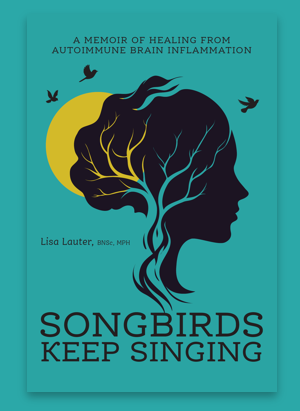
Her new book, Songbirds Keep Singing: A Memoir of Healing from Autoimmune Brain Inflammation blends personal accounts, research, and the author’s public health background as she searches for answers following her first seizure. Using her experience as both a survivor and nurse, Lisa explores the value of applying holistic concepts such as mindset, nutrition, exercise, gut health, hormones, and the environment alongside conventional medicine treatments to recover from a rare autoimmune disease. This book is a valuable resource for anyone navigating a complicated diagnosis who is curious about taking a multi-targeted approach to healing autoimmune inflammation comprehensively.